The article was also published in German.
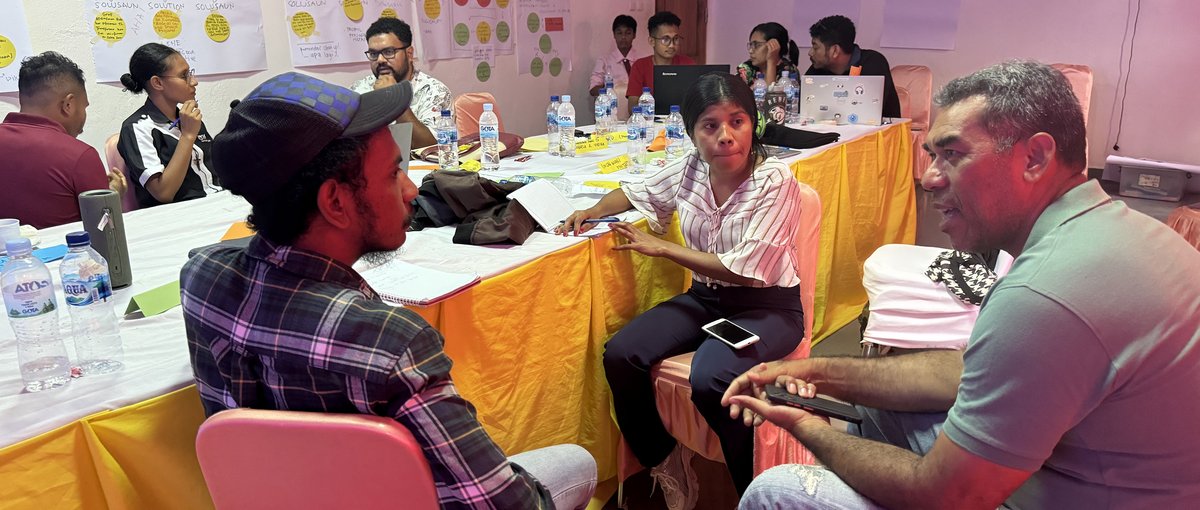
“Becoming a journalist in Timor-Leste is relatively easy,” said Adroaldo De Almeida, a East Timorese reporter now living in Australia. “Most aspiring journalists simply take a short course—three to six months—and then complete an internship at a media outlet. Many of these newly trained reporters, who enter the profession with limited formal education, tend to focus on light or straightforward stories, such as headline news, human-interest pieces, or social issues.” However, because there is little access to high-quality education and training for journalists, only a small number are able to produce in-depth or investigative reporting.
Even for those who choose this career, the financial reality is harsh. “Salary levels are a serious problem for journalists in Timor-Leste, especially in the private sector,” De Almeida noted. “Government media outlets offer slightly better pay, around US$300 to US$500 per month. But in private media, salaries are extremely low and unstable. Some journalists earn only US$150 per month, and some are paid as little as US$80 to US$100.”
Contracts are often valid for only one year and depend heavily on whether the media outlet can secure new funding—usually from the government or NGOs through project proposals. “If funding stops,” he added, “journalists are often asked to keep working as volunteers.”
Jo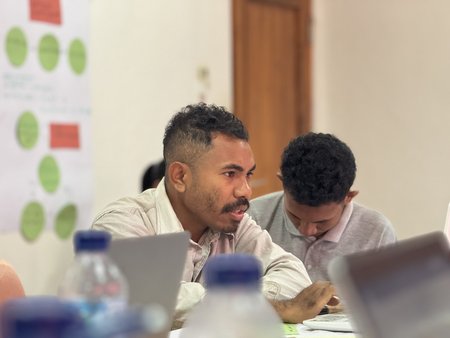 b security is another major concern. According to De Almeida, many media companies still use target-based contracts. “Some outlets offer a one-year contract with monthly pay—say, US$250—but the salary depends on meeting a writing quota, such as producing 20 news stories. If the quota isn’t met, journalists are paid per article, sometimes just US$10 per story.”
Another persistent challenge is language. Most journalists work only in Tetum, which makes it difficult for stories from Timor-Leste to reach an international audience. “There are still very few journalists who can write in Portuguese or English, yet these languages are essential for international reporting and broader access to information,” he explained.
These conditions are echoed by David Da Costa, a journalist from a private outlet in Dili. “Many media organizations rely on government advertising. Journalistic capacity remains limited—many reporters are still learning, and not all have received professional training. Outside Dili, infrastructure remains very weak. Digitalization is slow, online media are growing, but monetization is still minimal,” Da Costa said. “But the biggest difficulty is the low salary, which makes journalism an unstable profession.”
Little Has Changed in the Past Two Years
What De Almeida and Da Costa described mirrors the findings of State of the Media: Timor-Leste 2024, a report published by The Asia Foundation and ABC International Development. One of the report’s authors, Matthew Abud, explained that almost all media outlets rely on government funding to survive. “The state is the centre of Timor's economy and government funds are crucial for almost all media - those that don't receive this, are largely volunteer-based.”
This dynamic affects everything — including independence and the ability to develop and maintain journalistic skills, Abud noted. “Capacity is low. There's lots of churn. Low salaries mean journalists often look for other work, or work as volunteers. One broadcaster specifically referenced underpaying young staff until they leave, as part of the business model.”
Abud said the study specifically investigated perceptions and practices around 'disinformation'. Understandings of this varied; when raised, this often led straight to discussion of online abuse and character attacks. These were of much higher concern. “To me, that suggests 'disinformation' has arrived as an international policy priority, rather than from Timorese themselves, but which Timorese then use to talk about what really matters to them. While disinformation is a major challenge, in Timor's case it feels like its prioritization is an example of a top-down international frame that doesn't truly correspond to the most urgent local priorities.”
Under such conditions, it is extremely difficult to maintain media quality. The Director of Media Analysis and Monitoring at the Timor-Leste Press Council, Alberico Junior, described the situation clearly: “The government, through the Minister for Social Communication, offers subsidies to media outlets. But in return, those outlets are expected to publish government programs.”
Abud added there’s pressure on and caution from media when covering scandals or crimes of those in power. A lot of people talked about the influence of the church in this case - when covering the pedophile priest Dashbach, or church property scandals. There was often blowback or fear. Some of the laws have strong features - for example the role of the Press Council in resolving disputes. But laws also require journalists to register.
Abud pointed out, there's an abiding danger of defamation becoming a criminal rather than civil offense. “A few politicians have spoken in favour of this though it hadn't happened. The Cybercrime Law was in draft form then, and didn't have this, but even so several politicians spoke about including that measure.”
Press freedom rankings reflect this reality. Timor-Leste ranked within the top ten in 2023, dropped to the top twenty in 2024, and this year has fallen further to 39th place. “The decline in 2025 is due to several factors,” Junior explained. “In April 2024, the Secretary of State for Social Communication, Expedito Diaz Ximenes, entered the newsroom of the public broadcaster RTTL and asked for news content to be removed. There has also been increasing politicization of public media — RTTL and the state news agency Tatoli — with individuals linked to the ruling party appointed to lead both outlets. This has made it easier for government officials to interfere directly in newsroom decisions.”
Another recent incident also contributed to the decline. In September 2024, ahead of Pope Francis’ visit to Timor-Leste, police detained Diligente Online journalist Antonia Kastono Martins while she was reporting on the eviction of street vendors by the government in Dili.
Media Digital in Timor-Leste
But did the visit of the now-late Pope also bring a breath of fresh air—perhaps even the possibility of slightly faster internet speeds in Timor-Leste to support the growth of media digitalization? According to Abud, apart from some legacy print, and community radio, the smaller media especially by young people are all digital.” It enables different voices. But there's an enormous digital divide, with internet cost very expensive, and connectivity very limited outside the capital. The submarine internet cable was connected about a year ago and I'm not sure of the changes since then.”
Abud added that even popular online media struggle to earn revenue through digital platforms because many of those companies are not registered in Timor-Leste and have no local offices. “In addition the banking system is poorly integrated internationally so it's hard to get payments if, for example, your media earns income through ads on YouTube or similar,” he explained.
Meanwhile, Alberico Junior noted that internet-based media platforms now play a dominant role in fostering and strengthening the country’s still-young democracy. “However, disinformation on social media has become a major challenge for mainstream media, particularly in terms of how they maintain and build public trust. Media professionals must distinguish themselves by offering high-quality journalism.”
Much Work Still Lies Ahead
Both De Almeida and Da Costa agree that journalists’ welfare must be improved and that more professional training is needed in order to raise the overall quality of media in Timor-Leste. Moving toward that goal, Junior of the Press Council hopes that despite all existing challenges, journalistic independence can be upheld and journalists continue to adhere to established ethical standards. “But if the media in Timor-Leste is to progress, the government must stop politicizing public media and instead respect media work and guarantee press freedom.”
Political influence and self-censorship linked to political pressure are serious concerns
Abud, meanwhile, believes there are no instant fixes when it comes to improving the media landscape in Timor-Leste. He argues that several reforms are needed, including independent public funding—acknowledging that state funds will remain essential, while political influence and self-censorship linked to political pressure are serious concerns.
“Developing a mission that clearly identifies audiences and provides what they actually need—not just information about the government—is crucial. A shift away from treating the government as the primary audience is also needed,” Abud suggested.
Training for young people is needed, Abud said. “However, this won't have long-term impact without a change to the financial basis though. Greater focus on communities outside Dili is another need. Better women and gender rights coverage is vital. Social norms that enable gender-based violence desperately need to be challenged and changed.
Refusing to sink into pessimism, Junior called on all stakeholders to work together in promoting media and information literacy that can guarantee press freedom and ensure the public is well-informed with credible information.
As Timor-Leste transitions toward broader digital connectivity, the country has a rare opportunity—to strengthen local media, expand access to information, and deepen its democracy through critical and participatory journalism.
Yet without collective commitment—from the government, the media community, and civil society—persistent challenges such as a fragile economy, disinformation, and unequal access could undermine that potential.
The article was also published in German:Timor-Lestes Medien am Scheideweg: Die zentralen Herausforderungen
 About he Author
Ayu Purwaningsih is a graduate of DW Academy International Media Studies. Ayu is also an internationally certified journalism trainer and conducted a training program for journalists in Dili in 2024, in collaboration with DW Akademie and with support from the German Federal Foreign Office.