

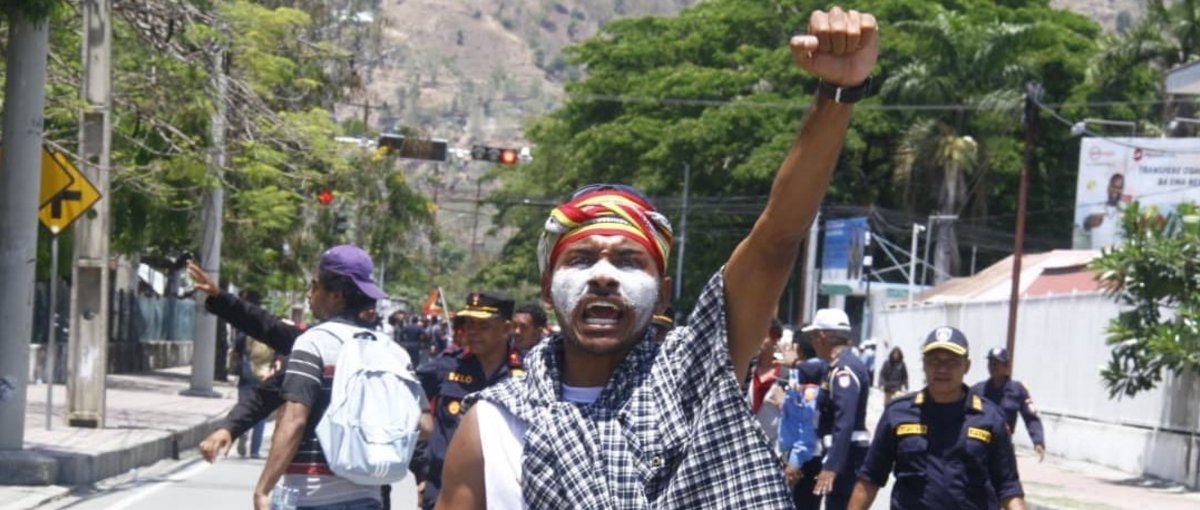
Throughout Asia, a new form of protest is taking hold: from the young people in Kathmandu demanding accountability from the state to the students in Jakarta rebelling against laws that restrict their freedom; from rallies on campuses in Manila to vigils in Dili – the current protests in Asia are not characterized by chaos, but are driven by a deep sense of injustice. These movements have no common ideology or strategy, but they are united in their rejection of current policies.
A German translation of this article was also published in the brochure: Die Kraft der Zivilgesellschaft in Asien (the article was written in October 2025).
From Silence to Sound: The Return of Protest in Uncertain Times
Across Asia, the language of protest is being rewritten. From Kathmandu’s restless youth demanding accountability to Jakarta’s students defying laws that curtail freedom, from the rallies of Manila’s campuses to the vigils in Dili; protest is re-emerging not as chaos, but as conscience. These movements share no single ideology or strategy, yet they converge in their refusal to accept politics as usual.
The last few years have tested the limits of civic space. Governments, often cloaked in the language of stability or national security, have tightened control over assembly, expression, and dissent. Yet, rather than silencing activism, repression has reshaped it. In this climate, student protests, historically the pulse of Asia’s democratic movements have re-emerged as both a generational reckoning and a societal mirror.
In Timor-Leste, students gathered not merely to challenge power but to remind their leaders of the unfinished project of independence; that democracy is not just the right to vote, but the duty to listen. In Indonesia, the protests over the new Criminal Code signified something deeper than policy disagreement. They questioned the moral contract between state and citizen, exposing how democratic institutions can hollow out even as elections continue.
Across these spaces, the act of gathering, often in defiance of surveillance, digital threats, or apathy has become a form of civic authorship. It is where the public rewrites its own agency, line by line, chant by chant. Protest, in this sense, is not only resistance; it is a rehearsal for democracy itself.
Lessons from the Streets: Indonesia, Nepal, the Philippines, Timor-Leste
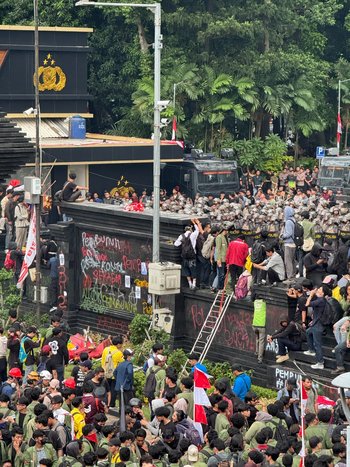 The Indonesian student movement remains one of Asia’s most visible barometers of civil society vitality. The 2019 Reformasi Dikorupsi (Reformasi Corrupted) movement, and later the students’ protests against the controversial Criminal Code, revealed how young people navigate between idealism and disillusionment. The protests bridged digital and physical spaces where we witness how X campaigns amplified street marches. Also at the same time, it highlights how digital control, disinformation, and fatigue have complicated collective action. Yet despite fragmentation, Indonesian students managed to push back against the normalization of corruption and authoritarian nostalgia.
In Nepal, students have been equally central to the unfinished democratic transition. Since the end of monarchy and the turbulent years of the Maoist conflict, youth and student organizations have acted as both agents and critics of the political order. The student demonstrations over education reforms and job scarcity revealed a frustration with the political elite’s inaction. But they also exposed the fatigue of politicized student unions long tied to parties. Young Nepalis today not only seek autonomy from partisan capture, they also want civic participation without clientelism, representation without manipulation. Their protest speaks not just against policy failure, but against the hollowing of ideals once used to mobilize them.
The Philippines offers another layer of complexity. From the anti-Marcos demonstrations of the 1980s to today’s youth-led mobilizations against historical revisionism and extrajudicial killings, protest has always been intertwined with memory. Under the current administration with Marcos Jr., attempts to rehabilitate authoritarian legacies have sparked renewed activism, particularly among university communities. Student collectives have used art, satire, and digital storytelling to reclaim history as resistance. What emerges is not nostalgia for old struggles but a defence of truth itself; that memory, when weaponized, can either sustain or destroy democracy.
Then there is Timor-Leste, Southeast Asia’s youngest democracy and perhaps its most honest mirror. Student movements there have been consistent moral voices, confronting issues from unemployment and corruption to veterans’ privilege and generational inequality. The 2025 youth mobilizations in Dili, sparked by dissatisfaction with governance, carried echoes of older struggles for independence but with new questions. What does freedom mean when the state forgets its youth? Unlike their predecessors, these young Timorese are not fighting foreign rule but demanding domestic accountability, which is a more elusive form of liberation.
These four cases reveal that protests across Asia are not mere eruptions of anger. They are re-negotiations of legitimacy. They reassert that democracy’s health cannot be measured by elections alone, but by whether citizens can still speak truth to power without fear.
The Quiet Power of Civil Society: Rethinking Protest Beyond the Street
Moving forward, for us to understand protest today, we must move beyond the image of chanting crowds. Much of civil society’s power now lies in quieter, decentralized, and creative spaces. Student movements are increasingly hybrid ranging from part street, part cyberspace, to part community. They organize through memes, art installations, and digital petitions as much as through banners and megaphones. What matters is not only visibility but endurance, which is the ability to sustain moral pressure even after the cameras leave.
In countries like Indonesia and the Philippines, where civic fatigue has set in after years of contestation, small collectives have found new ways to keep dissent alive, including campus reading groups discussing human rights, feminist circles documenting harassment cases, and independent media initiatives that teach digital literacy. In Nepal, youth-run NGOs link job insecurity with governance failures, reframing economic despair as a democratic question.
These are forms of protest that rarely make headlines, yet they are no less transformative. They remind us that civil society is not a noun but a verb; something practiced, negotiated, and sustained even in exhaustion. When formal institutions falter, it is often these informal networks that keep societies from descending into silence.
But civil society also faces new dilemmas. The shrinking of physical civic space is now mirrored by algorithmic control in digital spaces. Governments increasingly regulate speech through cyber laws, online surveillance, and misinformation campaigns. Meanwhile, donor fatigue and the professionalization of NGOs have distanced activism from its grassroots base. The challenge, then, is how to rebuild solidarity in an era of fragmentation to connect local struggles across borders without losing context or authenticity.
The ongoing student protests across Asia show that this is still possible. They are not coordinated movements, yet they share a moral vocabulary: justice, dignity, and accountability. They show that even amid disillusionment, the civic spirit remains stubbornly alive. And perhaps that is the quiet revolution of our time that young people, in refusing to give up, are reminding their societies that democracy is never finished.
When Protest Becomes the Pulse of Democracy
What unites Asia’s recent protests is not their success or failure in changing policy, but their insistence on reclaiming agency. Protest today is less about overthrowing regimes than about demanding recognition; to be seen, heard, and taken seriously. In a region where political transitions have often been managed from above, these movements remind us that renewal must also come from below.
When the streets of Jakarta, Kathmandu, Manila, and Dili echo with chants, they are not simply calling for reform; they are performing democracy. They reveal that civil society’s greatest power lies not only in mobilizing people but in reminding leaders of their duty to listen. Protest, at its core, is not a sign of instability, but it is proof that society still believes change is possible.
And that belief, fragile yet enduring, is what keeps democracy alive.
Khoo Ying Hooi, PhD is associate professor at Universiti Malaya.